The enzyme lactase is a biological protein produced in the digestive tract of humans and many animals. It is responsible for digesting lactose (the sugar found in milk and dairy products). Lactase breaks down lactose into two simpler sugars, glucose and galactose, which the body can absorb and use.
You can contact the following numbers to inquire about product prices:
The enzyme lactase is a biological protein produced in the digestive tract of humans and many animals. It is responsible for the digestion of lactose (the sugar found in milk and dairy products). Lactase breaks down lactose into two simpler sugars, glucose and galactose, which the body can absorb and use.
This enzyme is produced primarily by cells lining the small intestine, specifically in the villi of the small intestine.
Role and importance
Lactase is essential for the digestion and tolerance of dairy products. If the body does not produce enough lactase, lactose remains undigested and enters the large intestine, where it may be fermented by bacteria and cause digestive problems such as bloating, abdominal pain, diarrhea, and gas. This condition is known as lactose intolerance.
Lactase reducing agents
Age: Lactase production usually decreases with age.
Genetics: Some people produce less lactase due to their genetics, especially in non-lactose communities.
Intestinal diseases or injuries: Diseases such as celiac or Crohn’s disease may reduce lactase production.
Industrial use of lactase
Lactase is also used in the food industry, such as:
Production of lactose-free dairy products.
Added to dietary supplements to aid in lactose digestion.
This enzyme is also available in the form of dietary supplements that people with lactose intolerance can use before consuming dairy products.
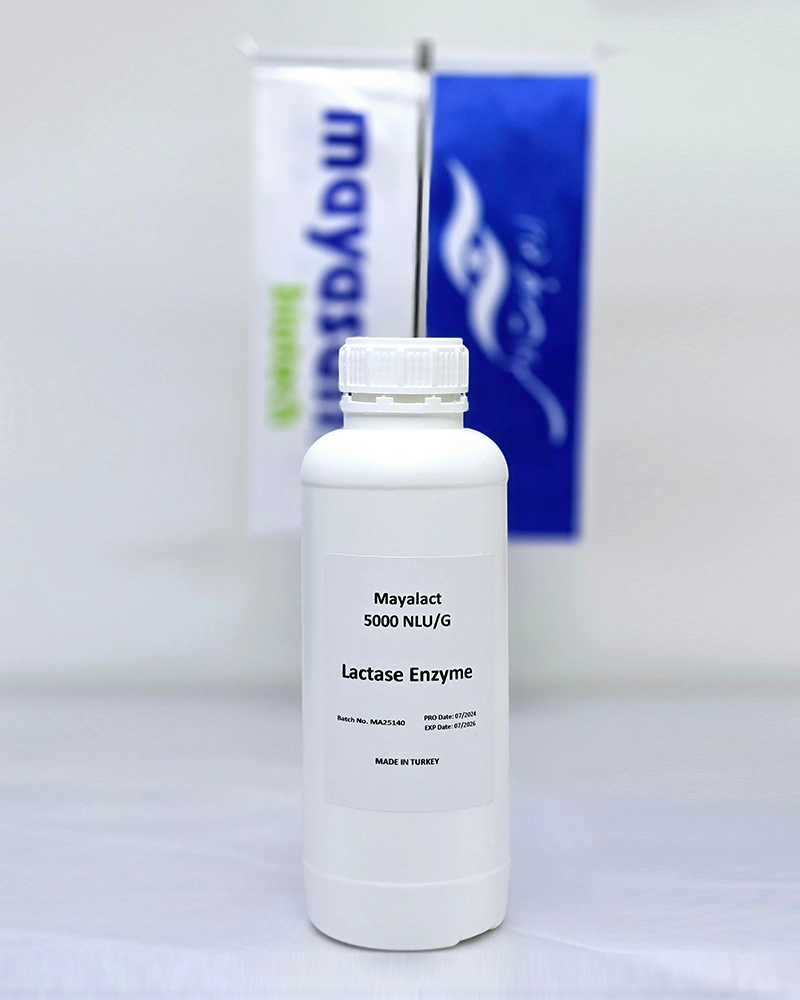
In order to solve the problems mentioned above, Mayasan Company has started producing lactase enzyme under the brand name MAYALACT®.
MAYALACT® is a unique, high-purity, lactose-reducing liquid enzyme that is used to produce high-quality milk and lactose-reduced milk-based products.
Benefits:
Controlled lactose removal including more accurate measurement of lactose levels
Reduced risk of off-flavors due to exceptional purity
Stable sweetness level over shelf life for sugary milk products
Lactose-reduced fermented milk products that are easily digestible
Fermented milk products with less added sugar
Same sweetness and texture over time
No process changes – lactase can be added by culture
Formulation flexibility: freedom to use starch-based stabilizers in yogurt formulations




Reviews
There are no reviews yet.